Annie Heath by Cameron Kelly McLeod
“I’m really glad that Performance Mix #34: Remotely Yours turned out to be so productive for me. I was able to wrap my head around the ideas that were all circling in my head.”
–Annie Heath


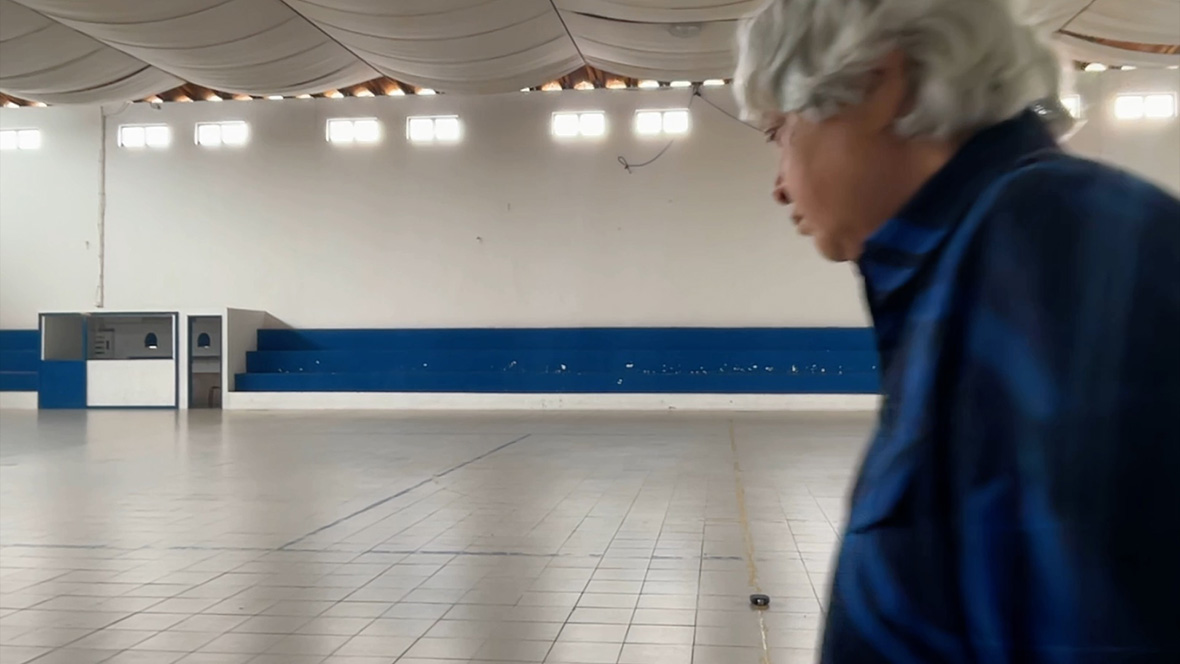
In the summer of 2025, after one debilitating year of living with polymyalgia rheumatic, I danced for a small group of friends in our home studio in Cape Cod, Massachusetts. It was a toast on my 77th birthday. My husband said, “I have my Karen back.” I had spent the summer popping in and out of restaurants in the Cape, dancing solo to cover bands and testing what it felt like to move in my body again as I learned to manage rheumatic. I was ready to return to dancing for others, and the birthday dance was absolutely exhilarating. I was a dancer, my lifelong identity, once again. I want to celebrate the lifeblood that is being able to return to movement through the creation of a new solo-piece called “Rheumatica.”
As a first step to develop “Rheumatica,” I spent the fall of 2025 in Messejana, Portugal as a creative in residence at Buinho where I danced to a playlist of 1960s-70s music. The playlist includes songs like Howard Roberts’s “Girl Talk,” The O’Jay’s “Backstabbers,” and Dusty Springfield’s “Spooky.” l videotaped my free movements at their athletic center. The markings on the floor inspired the structure of the work. A highlight of the Buihno residency was engaging with other incredible artists from across the globe.
The next major step in the development of the work will be to translate the videotaped sections into live performance and guided through a dramaturgy process with Lisa Parra. Translating the video to live performance involves a range of tasks and modes of inquiry – watching the film to identify the particular social dance movements that I want to highlight; selecting stills from that film and creating a database of those stills; exploring various configurations of those stills into a single structure for a performance presentation piece; and then rehearsing ways in which to embody those stills for live performance. This is the first time I will create a piece following this process, so I am excited about the possibilities of what may come of this new method of working.
I also need to consider what might make sense for other presentation elements like a score, visual art, or costume (though I am leaning toward minimalism). And, across the piece, I need to determine the balance of nostalgia relative to freshness so that the final work intrigues a wide audience. I also need to recognize my physical limitations while allowing for freedom. I want to feel free (not constrained), and this feeling needs to come through in the piece.
This work is personal because of my recovery from polymyalgia rheumatica and because it connects me to my father. A member of the Charles Weidman Dance Company, my father was a self-taught dancer and teacher. He taught all types of basic dance forms – jazz, tap, ballroom, modern dance, his great love, and social dance, which has long lived in me. In some ways, this piece will be an homage to him and his work. “Rheumatica” is a celebratory love letter to him and to my 77-year-old self who can dance again.
Annie Heath by Cameron Kelly McLeod
“I’m really glad that Performance Mix #34: Remotely Yours turned out to be so productive for me. I was able to wrap my head around the ideas that were all circling in my head.”
–Annie Heath
New Dance Alliance
182 Duane Street
New York, NY 10013
(646) 510-1824
 All venues are wheelchair accessible.