DAY IN THE LIFE OF DANCE: Artists at Work for the Performance Mix Festival at Abrons Arts Center
By Sarah Cecilia Bukowski, Published on June 8, 2026
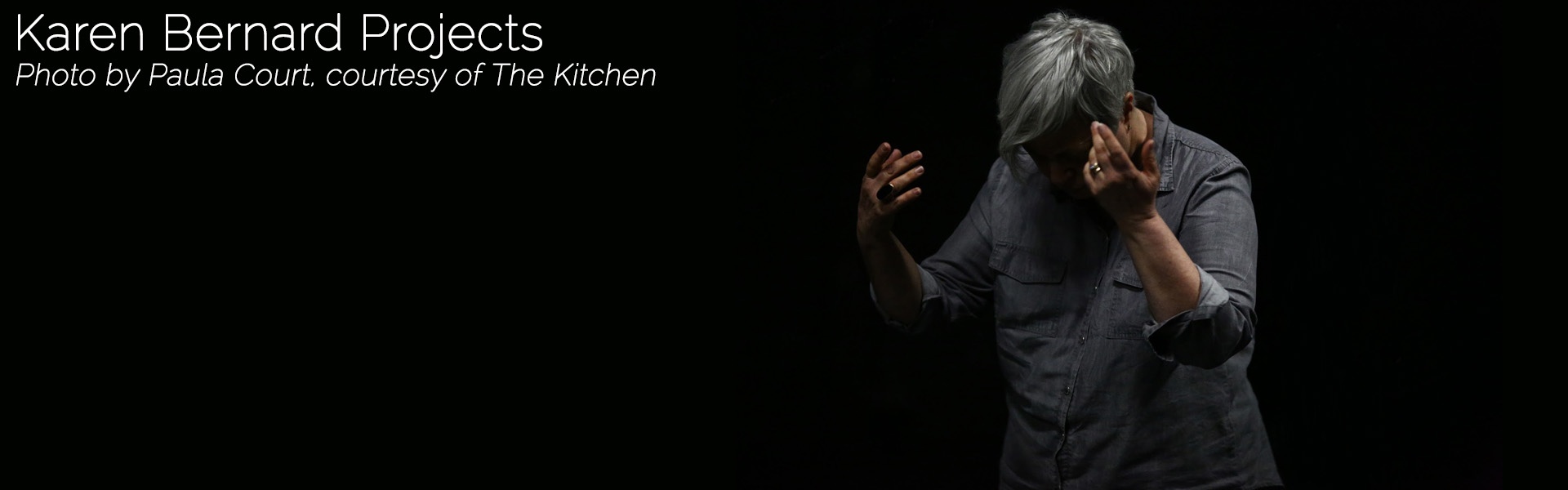
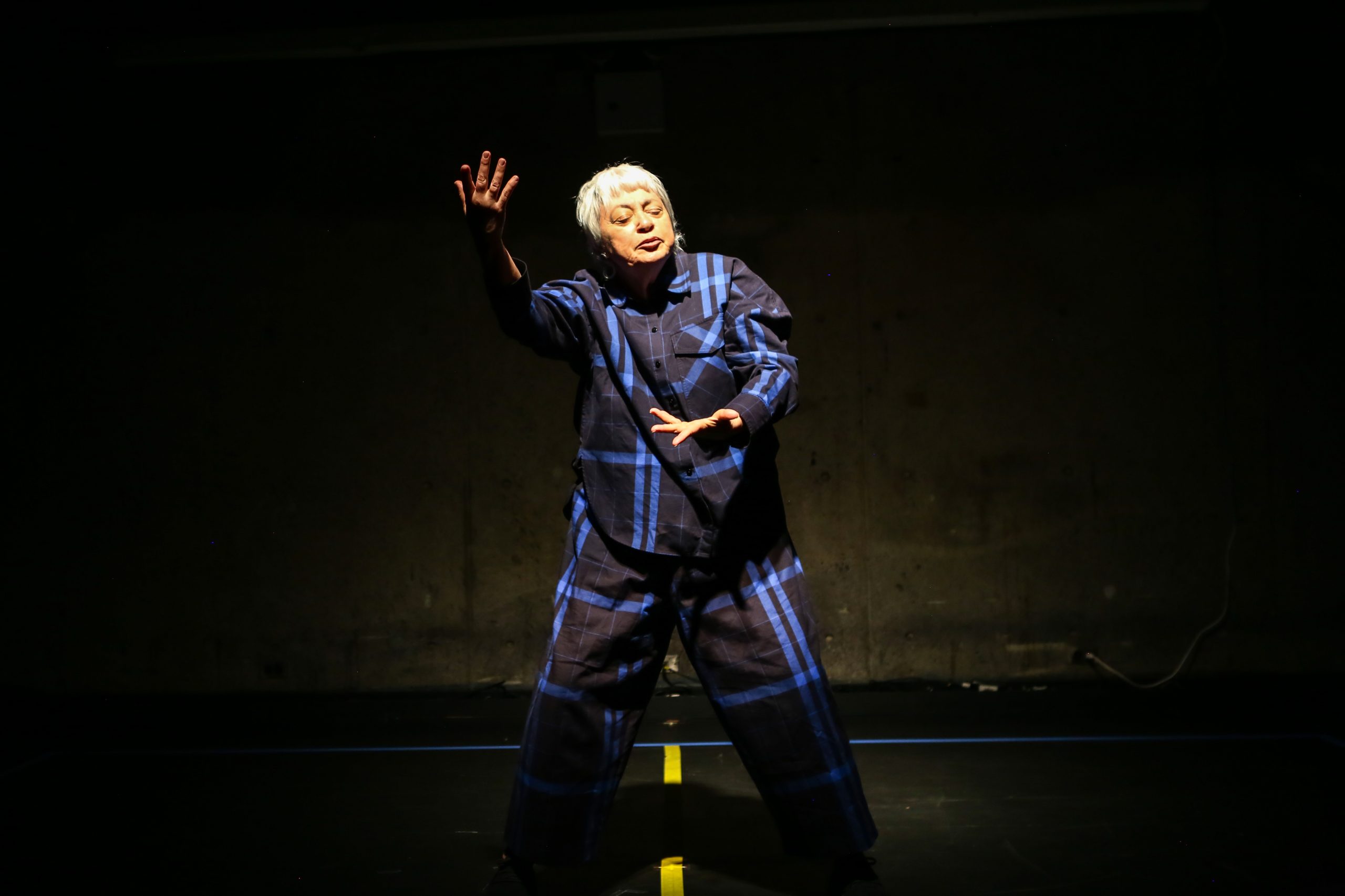
Karen Bernard, “Rheumatica” (in rehearsal June 6, 2026)
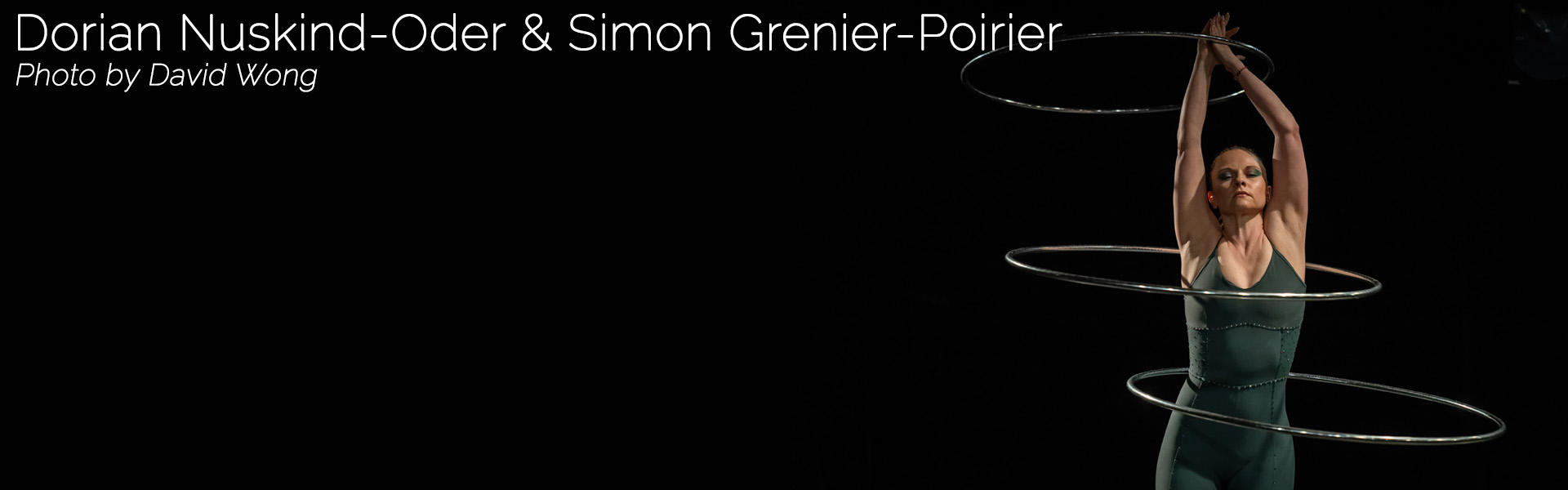
I was particularly disappointed to miss Performance Mix’s “Saturday Night Special” program, which featured works by New Dance Alliance Executive and Artistic Director Karen Bernard and Montreal-based guest artists Elena Lev, Dorian Nuskind-Oder, and Simon Grenier-Poirier. It was a rare pleasure to witness Bernard prepare and rehearse her longform solo, “Rheumatica,” as an ode to her twinned durational practices of living and dancing. The work’s title draws from a recent bout of rheumatism that severely curtailed her physical capacity, and her self-proclaimed “miraculous” recovery is evident in the fluid symmetries and focused stamina of her septuagenarian dancing body. Her feet carry undercurrents of rhythm as she traces small scuffed steps around a blue-taped perimeter and across a yellow center line, her arms and hands expressive in gestures by turn spiky, tender, undulating, and free. Hips and shoulders give a subtle twist to her linear boogie, which opens up into diminishing figure eight patterns that coalesce into a brief spotlit ode. Her torso ascends and descends through elegantly rounded gestures of holding, shielding, offering, rising; she bows to shake and nod her silvered head to the beat that lives in her body. The lights dim almost imperceptibly slowly (a two-minute fade to black) on her rapturous freestyling—a slow fade on what I can only hope will be a long life and legacy of bringing decades of experimental performance to light.
In the summer of 2025, after one debilitating year of living with polymyalgia rheumatic, I danced for a small group of friends in our home studio in Cape Cod, Massachusetts. It was a toast on my 77th birthday. My husband said, “I have my Karen back.” I had spent the summer popping in and out of restaurants in the Cape, dancing solo to cover bands and testing what it felt like to move in my body again as I learned to manage rheumatic. I was ready to return to dancing for others, and the birthday dance was absolutely exhilarating. I was a dancer, my lifelong identity, once again. I want to celebrate the lifeblood that is being able to return to movement through the creation of a new solo-piece called “Rheumatica.”
As a first step to develop “Rheumatica,” I spent the fall of 2025 in Messejana, Portugal as a creative in residence at Buinho where I danced to a playlist of 1960s-70s music. The playlist includes songs like Howard Roberts’s “Girl Talk,” The O’Jay’s “Backstabbers,” and Dusty Springfield’s “Spooky.” l videotaped my free movements at their athletic center. The markings on the floor inspired the structure of the work. A highlight of the Buihno residency was engaging with other incredible artists from across the globe.
The next major step in the development of the work will be to translate the videotaped sections into live performance and guided through a dramaturgy process with Lisa Parra. Translating the video to live performance involves a range of tasks and modes of inquiry – watching the film to identify the particular social dance movements that I want to highlight; selecting stills from that film and creating a database of those stills; exploring various configurations of those stills into a single structure for a performance presentation piece; and then rehearsing ways in which to embody those stills for live performance. This is the first time I will create a piece following this process, so I am excited about the possibilities of what may come of this new method of working.
I also need to consider what might make sense for other presentation elements like a score, visual art, or costume (though I am leaning toward minimalism). And, across the piece, I need to determine the balance of nostalgia relative to freshness so that the final work intrigues a wide audience. I also need to recognize my physical limitations while allowing for freedom. I want to feel free (not constrained), and this feeling needs to come through in the piece.
This work is personal because of my recovery from polymyalgia rheumatica and because it connects me to my father. A member of the Charles Weidman Dance Company, my father was a self-taught dancer and teacher. He taught all types of basic dance forms – jazz, tap, ballroom, modern dance, his great love, and social dance, which has long lived in me. In some ways, this piece will be an homage to him and his work. “Rheumatica” is a celebratory love letter to him and to my 77-year-old self who can dance again.
Rheumatica (work in progress) Creation and performance: Karen Bernard Dramaturg: Lisa Parra Sound Design: Created by Karen Bernard with samples from My Feet Keep Dancing (Chic) and Move Your Feet (Junior Senior) Costume: (Shirt) Matter Matters (Pants) Hwa Park Rheumatica was made possible through support of Buihno residency in Portugal and individual supporters. Karen Bernard Projects is a program of New Dance Alliance.
Join NDA’s Email List
Support NDA!
What artists are saying
K.J. Holmes, photo by Elyse Mertz
“Performance Mix Festival has its own life, and Karen and the staff continue to evolve with the times in a way I appreciate…it was tremendous to be a Liftoff AIR and then get to show the work I had continued to explore as an AIR a year later at PMF!”
– K.J. Holmes
New Dance Alliance
182 Duane Street
New York, NY 10013




 All venues are wheelchair accessible.